The Seneca called this place Jaödeogë – “between two rivers” or Dayaogeh – “Beautiful Place of Three Rivers.” When I designed a custom case for my Meshtastic device, I wanted to honor that same geography. But instead of translating, I created something new: a visual sentence in Nahuatl that speaks to both my decolonization journey and what Prototype PGH is building.
What Is Meshtastic?
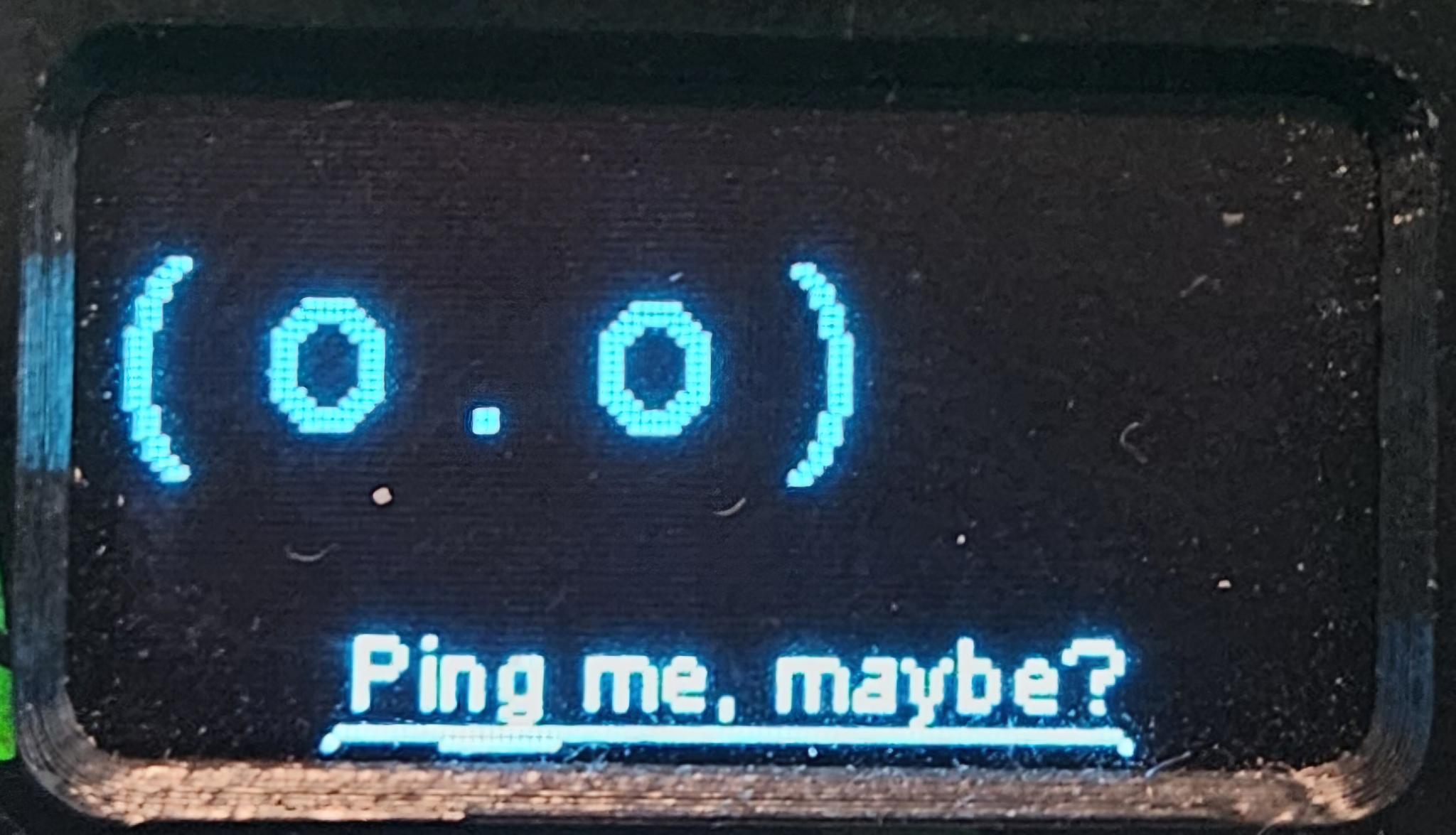
Meshtastic is a community-run mesh network—a way for people to communicate without relying on cell towers or the internet. Nodes (devices like mine) relay messages to each other across distance. It’s infrastructure we own and control. In a natural disaster, when cellular networks fail, mesh networks keep communities connected. I created a module called LoRaBot which changes faces when different things happen on the network and wanted to make a custom case for it.
The Case: Form Meets Function
I started with an existing Heltec v3 case design from MakerWorld, then modified it. I needed more internal space for a large battery—essential for a reliable mesh node—so I redesigned the interior while keeping the external profile. The extra space on the front became room for Nahuatl expression.
The Glyph Sentence
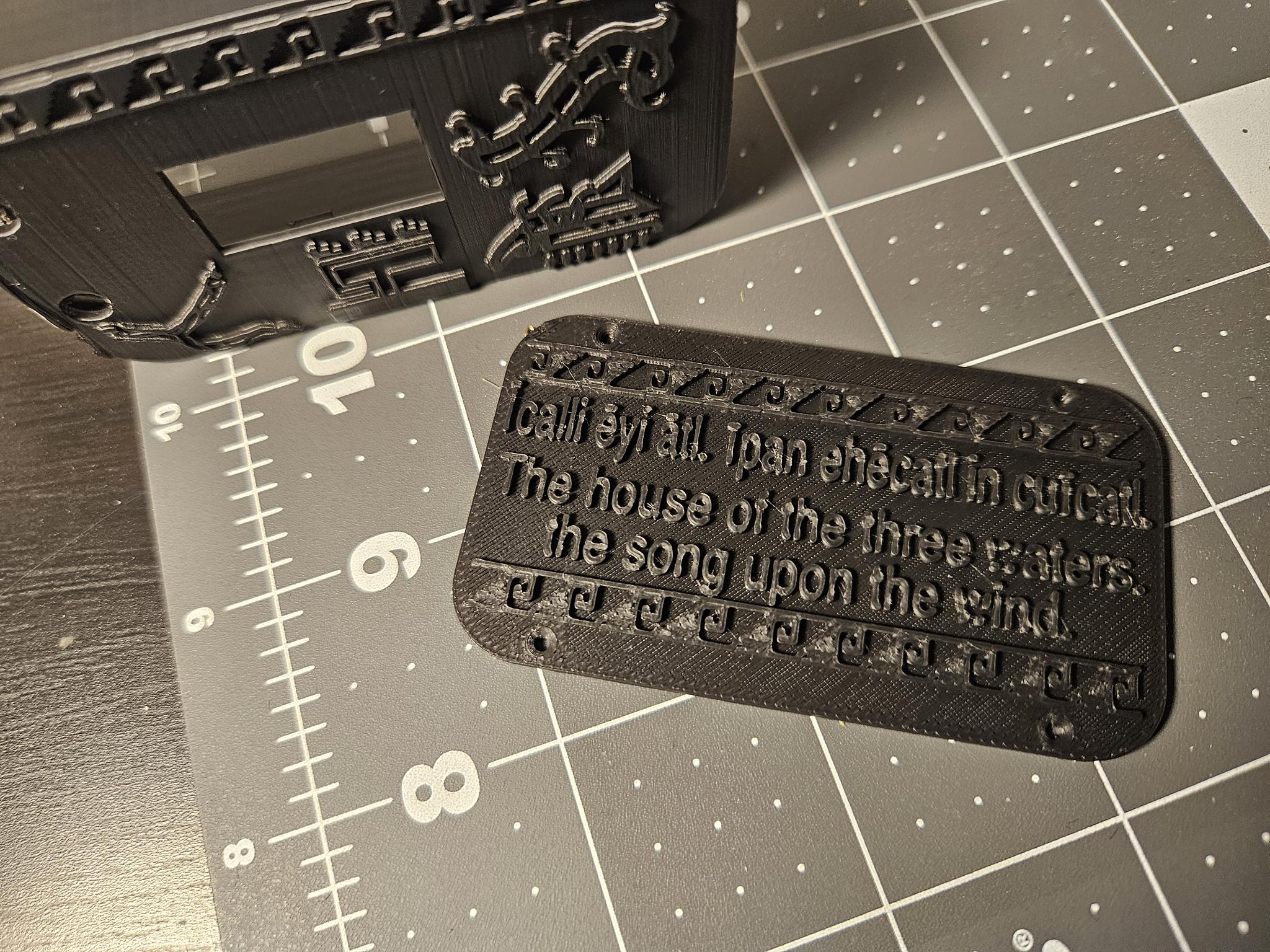
Īcalli ēyi ātl, īpan ehēcatl in cuīcatl
The house of three waters, the song on the wind.
Breaking It Down
Īcalli ēyi ātl (The house of three waters)
- Īcalli: house.
- ēyi ātl: Three waters. Pittsburgh. Dayaogeh. The geography that defines us.
īpan ehēcatl in cuīcatl (The song on the wind)
- in cuīcatl: Song, voice, communication.
- īpan ehēcatl: On the wind.
- Together: The voice doesn’t stay contained. It travels.
Glyph Placement as Spatial Grammar
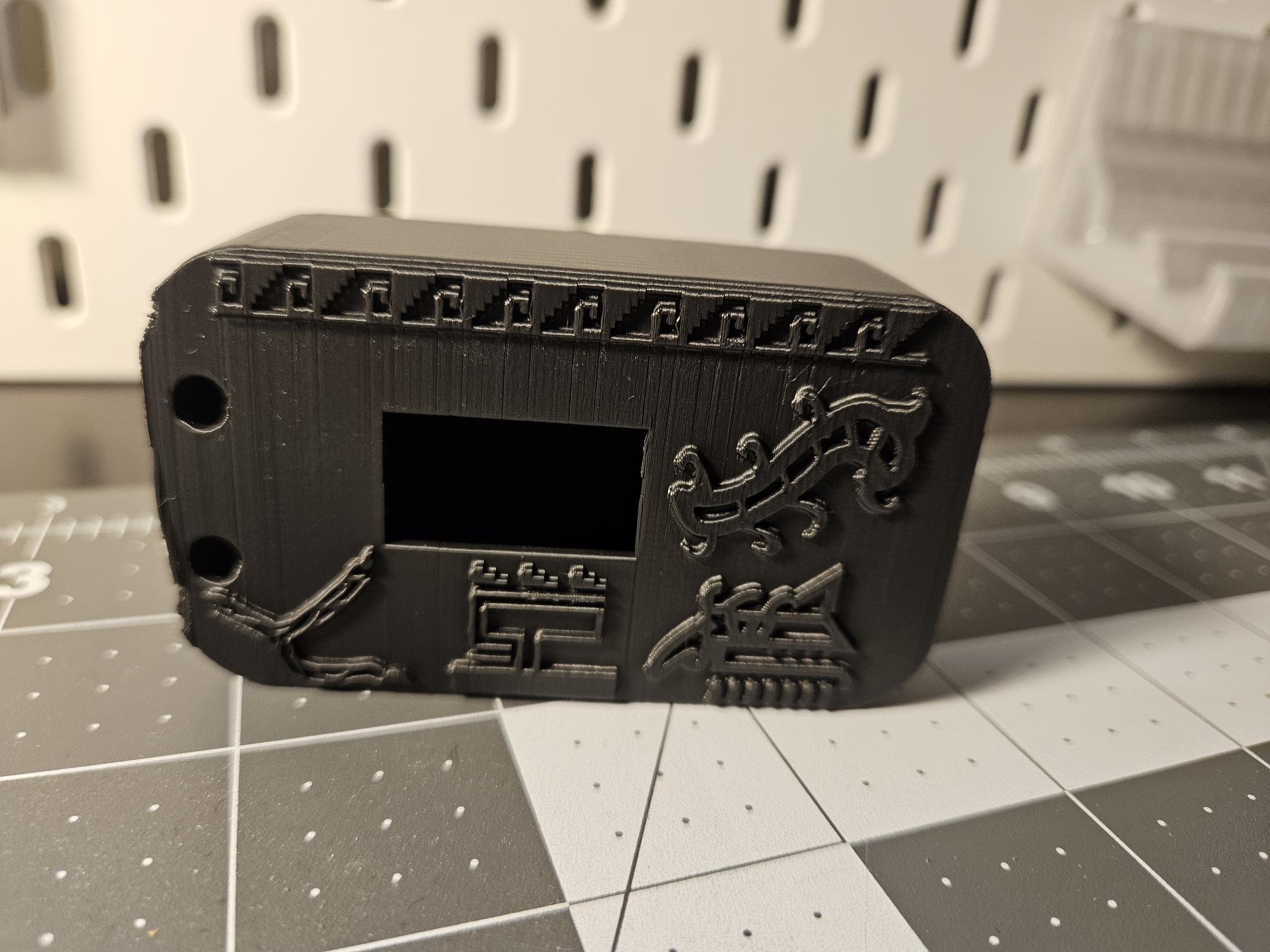
Nahuatl writing isn’t just about individual symbols—it’s about spatial relationships. How glyphs sit relative to each other conveys meaning. I used this principle to build the case layout:
The Geography: Three Rivers (Atl) On the far left sits the three-river glyph—three water streams converging into one point. It anchors the entire composition, grounding the device in Pittsburgh’s actual geography.
The House (Calli) Below the screen sits the house glyph. In Nahuatl spatial grammar, what comes below is foundational, supporting. The calli is the structure, the grounded node.
The Speaker: Screen as Voice The screen displays an animated face—this is the voice emerging. It sits directly on top of the calli, visually showing how the house generates communication. The face becomes the speaker.
The Song (Cuicatl) Above the screen, the cuicatl glyph appears above the speaker’s head—the song emerging from speech. In Nahuatl codices, glyphs placed above or emanating from a figure show what that figure produces or emanates.
The Wind (Ehecatl, the glyph I used more stylized) The wind glyph sits beneath and supporting the cuicatl. This recreates the Nahuatl principle of directional flow: the song rides on the wind. The spatial relationship shows causality—not just two separate concepts, but one carrying the other.
The reading becomes multidirectional and relational, not just left-to-right: Foundation (rivers) → Structure (house) → Voice (face) → Expression (song) → Transmission (wind).
This was my attempt to mirror how Nahuatl glyphs worked in codices—meaning emerged from where things were placed relative to each other, not just what they looked like individually.
Building New Words
How do you represent a radio signal? An invisible mesh network?
For LoRa communications I used Ehecatl Cuicatl (Wind-Song). I paired ehecatl (wind)—the invisible force carrying what we cannot see—with cuicatl (song). In Nahua culture, cuicatl is far more than music: it’s intentional, sacred utterance that carries knowledge, history, and resistance. So ehecatl cuicatl (wind-song) means not just invisible transmission, but meaningful knowledge traveling.
For Pittsburgh itself, I didn’t create a new glyph. I adapted the atl symbol: three separate water streams converging into one point. This is both a traditional symbol and a neologism—honoring Nahuatl visual grammar while extending it to document this place.
What This Means
Creating neologisms for a language marginalized by colonization is my small act of reclamation. I want to show that this language lives, it describes my world now and I build its future.
The glyphs on my case tell this story: A house speaks. Its song travels on wind. It reaches others. They reach back. We build networks. We organize ourselves. We care for each other.